

The copper IUD
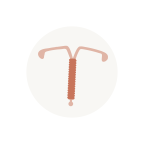
The copper IUD is a small, copper-coated T-shaped device that is inserted into the uterus by a doctor. Depending on the model and the age of the person at its insertion, it is effective between 5 and 10 years.
Mode of action :
The copper IUD acts on several levels:
- The copper with which it is made is toxic to spermatozoa (sperm).
- It modifies the endometrial wall and prevents the potential implantation of a fertilized egg.
Advantages
- It is very effective, although no contraceptive method is 100% effective.
- It is a long-term contraceptive method.
- It offers freedom because there is no need to take it daily.
- It has no effect on the production of maternal milk for those who are breastfeeding.
- It respects the natural menstrual cycle.
- It is an alternative to contraceptives that contain estrogens.
- It can be used as an emergency IUD.
Disadvantages
- It does not protect against sexually transmitted and/or blood-borne infections (STBBIs).
- A doctor must be consulted to have it inserted or removed.
- Pain and cramping during the insertion procedure and for 10-15 minutes afterward.
- The partner can feel the presence of threads during sexual intercourse (these threads can be cut by a doctor if they are bothersome).
- The most common side effects are longer-lasting menstruation, and increased cramping, and/or menstrual bleeding. It is advisable to wait 3 months before changing the contraceptive method, as side effects generally disappear after this period. However, if side effects are severe, you should consult a doctor as soon as possible.
- This method is contra-indicated for women who have an acute pelvic infection (of the uterus or the fallopian tubes); cervical or endometrial cancer; an STBBI; a malformation of the uterine cavity; uterine bleeding of unknown cause; an allergy to copper; or for women who are pregnant or think they might be.
- Rare complications: inflammation of the uterus (endometritis) or fallopian tubes (salpingitis) in the first month after its insertion or following an STBBI; ectopic pregnancy; risk of uterine perforation during insertion of the IUD; or risk of expulsion.
How do I get a copper IUD?
You must make an appointment with a doctor to have an IUD inserted. The IUD is available from a doctor or at a pharmacy with a medical prescription. The cost varies from place to place and according to medical insurance.
Before inserting an IUD, the doctor asks questions about the person’s medical history and proceeds with a physical exam and an STBBI screening.
The copper IUD can be used as an emergency contraceptive (emergency IUD) for up to 7 days following an unprotected sexual relation, but the sooner it is inserted, the more effective it is. Afterwards, it can be kept as a contraceptive method.
Instructions for Use:
Requires a medical consultation for insertion and removal.
The copper IUD is an effective method of contraception as soon as it is inserted. However, it is recommended to wait 72 hours before having vaginal intercourse.
Please note!
In most cases, the copper IUD can be used as a contraceptive method, regardless of whether you have been pregnant before.
If you have never been pregnant, insertion may sometimes be more painful.
When is it inserted?
- During the menstruation to ensure there is no pregnancy.
- Immediately following a miscarriage or an abortion.
- Some doctors will insert it immediately after childbirth, while others will wait 4 to 6 weeks after.
- On the day of your choice.
A follow-up exam should take place 4 to 12 weeks after its insertion and once a year afterwards.
The hormonal IUD
The IUD is a small T-shaped plastic object that is placed in the uterus. The hormonal IUD models available in Canada are the Mirena® and the Kyleena®. The duration of their effectiveness is 5 years.
Mode of action :
- It thickens the cervical mucus, making it difficult for spermatozoa (sperm) to pass through.
- The progesterone thins the endometrium and the IUD modifies its lining, preventing the potential implantation of a fertilized egg.
- It inhibits spermatozoa (sperm) function.

Advantages
- It is very effective, although no contraceptive method is 100% effective.
- It decreases the duration of menstruation, bleeding, and menstrual cramps.
- It is a long-term contraceptive method.
- It offers freedom because it does not need to be taken daily.
- Many people stop bleeding after 1 year of use, which reduces the risk of anemia. (Regular bleeding usually resumes 3 months following the withdrawal of the IUD).
- Contrarily to the copper IUD, hormonal IUDs offer certain protection against fallopian tube infections.
- It is an alternative to contraceptives that contain estrogen
Disadvantages
- It does not protect against sexually transmitted and/or blood-borne infections (STBBIs).
- A doctor must be consulted to have it inserted or removed.
- Pain and cramping during the insertion procedure and for 10-15 minutes afterward.
- The partner can feel the presence of threads during sexual intercourse. If they are bothersome, a doctor can cut them.
- The most common side effects are irregular bleeding (especially in the first 6 months), headaches, nausea, breast tenderness, vaginal discharge, acne, mood changes, etc. In case of side effects, it’s advisable to wait 3 months before changing the contraceptive method, as side effects generally disappear after this period. However, if side effects are severe, you should consult a doctor as soon as possible.
- This method is contra-indicated for women who have an acute fallopian tube pelvic infection; have an STBBI; are pregnant or think they might be; have breast, cervical, or endometrial cancer; or who have uterine bleeding of unknown cause.
- Rare complications: Inflammation of the uterus (endometritis) or fallopian tubes (salpingitis) in the first month after insertion or following an STBBI; an ectopic pregnancy; risk of uterine perforation during insertion of the IUD; or risk of expulsion.
How to get the hormonal IUD?
For a prescription for the Mirena® or Kyleena® IUD, you must consult a doctor, a nurse, or a pharmacist. The cost varies from place to place and according to your medical insurance.
Before inserting an IUD, the doctor asks questions about the person’s medical history and proceeds with a physical exam and an STBBI screening.
The Mirena IUD can be used as an emergency contraceptive for up to 5 days following an unprotected sexual relation, but the sooner it is inserted, the more effective it is. It can be kept as a contraceptive method afterwards.
Instructions for use
Requires a medical consultation for its insertion and removal.
It is recommended to wait 72 hours before having sexual relations with vaginal penetration.
When is it inserted?
- Anytime during the cycle, but the period after menstruation is preferred.
- Immediately after a miscarriage or an abortion.
- 4 to 6 weeks after childbirth.
If the IUD is inserted 7 days following the menstruation, its effectiveness is immediate. Otherwise, it is recommended to use a condom for a minimum of 7 days following the insertion of the IUD, or as directed by a healthcare professional.